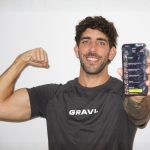
Meet Hassam, the non-technical founder who used Cursor, gave away equity, and hit $20K a month in 90 days by refusing to wait for an audience
Hassam Bhatti had no audience, no distribution, no engineering background, and no realistic reason to believe that the internet was waiting for his product, which is usually where these stories quietly end, except he noticed something important at exactly the right moment, which was that AI tools had collapsed the distance between knowing a problem deeply and being able to ship software that solved it.
So he took everything he already knew, locked himself in for 48 hours, built his first SaaS with Cursor, and then did something most founders never even consider. He borrowed someone else’s audience.
Ninety days later, the app was doing over $20,000 a month.

From corporate to Cursor
Before Launch Fast existed, Hassam was working a corporate job while running two Amazon private label brands on the side, which meant his days were split between meetings he did not care about and spreadsheets he absolutely did, because those spreadsheets decided whether a product launch was going to make money or quietly drain his savings.
He was not a developer, had no computer science degree, and did not grow up building side projects for fun, but he did spend an unhealthy amount of time on Twitter, which is where he discovered Cursor and AI coding tools earlier than most people, back when the idea that non-technical founders could build real software still felt slightly controversial.

Like most people given new power, he immediately overused it, building ten to twelve small projects across different ideas and industries, most of which never saw the light of day and now live permanently in the GitHub graveyard, but each one taught him reminded him of something critical, which is that building is not the hard part anymore, choosing what to build is.
That realisation only clicked when he stopped trying to solve abstract problems and started solving his own.
The idea that came from pure frustration
The Launch Fast idea did not come from market research or trend reports or scrolling through SaaS directories looking for gaps, it came from Hassam sitting in front of Google Sheets at midnight, manually copy-pasting Amazon data for the twentieth time, and wondering why product research still felt like unpaid labour in 2025.
Every tool he tried looked impressive on paper, claimed to solve important problems, and somehow managed to miss the actual bottlenecks sellers faced day to day, which is often what happens when tools are built by people who understand the market intellectually but not emotionally.

Hassam did. He knew exactly how long research took, where decisions stalled, which data mattered, and which features sellers pretended to care about because every tool included them. That was the edge, and it was not technical, it was experiential.
The problem was distribution, because knowing the problem means nothing if nobody sees the solution.
Solving distribution before writing code
This is where Hassam did something that feels obvious in hindsight and almost never happens in practice.
Instead of trying to build an audience from scratch on Twitter, Reddit, or LinkedIn, which can take years and usually does, he remembered that two years earlier he had bought into a coaching program called Legacy X, a company with thousands of active Amazon sellers who were already paying for tools and constantly looking for better ones.
Legacy X had exactly what Hassam did not: attention, trust, and distribution.
So he reached out with a simple pitch that did not rely on buzzwords or slides, telling them he could build a better product research tool than what they were using, asking for 48 hours to prove it, and offering a partnership if they liked what they saw, with no pressure and nothing to lose on their side.
Then he disappeared for two days and built the thing.
The 48 hours that changed everything
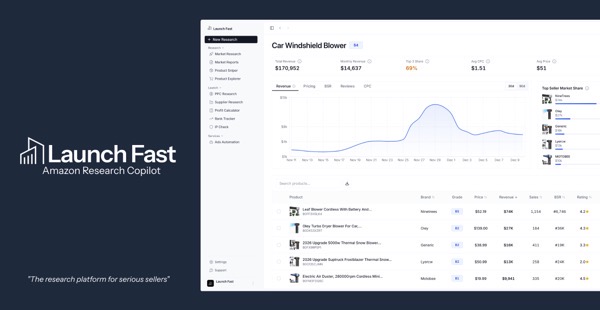
Those 48 hours were not glamorous, but they were extremely deliberate. The first few hours were spent mapping Legacy X’s existing workflows, SOPs, and data pipelines, combining them with Hassam’s own Amazon processes so the MVP would feel familiar instead of disruptive, which is an underrated advantage when selling to people who already have habits.
The next chunk of time went into building core functionality with Cursor, not aiming for perfection but for something functional enough that users could immediately see themselves using it, followed by long stretches of testing, fixing, and iterating, where Cursor quietly did most of the heavy lifting while Hassam focused on whether the product actually solved the right problems.
He spent more time than expected on branding and UI, because Amazon had taught him that perception matters far more than founders like to admit, especially in tools that promise speed and clarity, and then finished with another round of testing before recording a demo and sending it off.
The next morning, he woke up to a call that started with “quit your job.”
Trading equity for certainty
The partnership meant giving up equity, which scares founders who are still attached to hypothetical outcomes, but Hassam was pragmatic about it, because equity in something with no users is just optimism in spreadsheet form.
By partnering with Legacy X, he traded ownership for instant validation, instant customers, and instant feedback, and within 30 days Launch Fast was doing around $10,000 in monthly recurring revenue, climbing to $17–18K by day 60, and crossing $20K by day 90, with steady growth instead of a spike followed by silence.
Pricing was straightforward, with discounted access for Legacy X’s coaching customers and a higher public price for everyone else, plus a Chrome extension that converted well because it was built specifically for people already in the ecosystem.
The important detail is that every user was paying, which rarely happens by accident.
Why this worked when everything else failed
Hassam is blunt about why this project succeeded when the previous ten did not, and it has nothing to do with Cursor, frameworks, or shipping speed.
The difference was domain knowledge.
Before Launch Fast, he was building tools in markets he did not truly understand, guessing at user pain points, and hoping features would resonate, which is a slow and expensive way to learn. With Amazon sellers, he already knew the problems end to end, because he lived them, and that meant the software felt obvious to users in the best possible way.
His broader point is uncomfortable but accurate, which is that almost everyone has niche knowledge somewhere, whether it comes from a job, a side hustle, or an obsession, and AI tools now make it possible to turn that knowledge into software without asking permission from a technical co-founder.
The playbook he would use again
If Hassam were starting over today, he would not chase originality, audiences, or clever positioning.
He would list the few domains where he genuinely understands the problems, find markets where people are already paying for software, dig into real user complaints across communities and reviews, build the smallest useful MVP possible, and then look for partners who already control attention instead of trying to manufacture it himself.
After launch, he would ship daily, listen obsessively to feedback, and iterate based on what breaks, because momentum beats polish and learning beats planning.
The through-line is simple: execution backed by real knowledge outperforms ideas backed by confidence.
The uncomfortable takeaway
What makes Hassam’s story interesting is not that he built a SaaS in 48 hours, because that is becoming increasingly common, but that he refused to romanticise ownership, distribution, or the idea of doing everything himself.
He understood that most people are bad at marketing, worse at finding customers, and wildly optimistic about how long that will take to improve, and instead of grinding through that phase out of pride, he sidestepped it entirely by partnering with someone who had already solved the hardest problem.
Fifty percent of something real turned out to be infinitely better than one hundred percent of an idea.
And the quiet implication, which makes this story slightly uncomfortable in the best way, is that if you already know a problem deeply and you are still waiting for the perfect moment to build, the only thing missing at this point might be the decision to start.